Calming Anxiety from the Inside Out: How CranioSacral Therapy, Lymphatic Drainage, Foot Zones, and Simple Daily Practices Support a Calmer Nervous System
Anxiety is more than a racing mind. It is a full-body experience. When the nervous system stays locked in “fight or flight,” heart rate rises, muscles tighten, digestion slows, sleep suffers, and even small stressors feel overwhelming. The body forgets how to shift into “rest and digest.” At AJ Bodywork, we see this pattern frequently and support it with gentle, hands-on therapies plus practical tools clients can use between sessions.
CranioSacral Therapy, Manual Lymphatic Drainage, and foot zone work address different layers of this stress response. Combined with simple at-home practices, they help the body remember safety and ease.
CranioSacral Therapy and the Nervous System
CranioSacral Therapy (CST) is a gentle, light-touch approach that works with the membranes and cerebrospinal fluid surrounding the brain and spinal cord. The goal is to release restrictions that keep the central nervous system from self-regulating.
Many people with anxiety notice chronic tension in the head, neck, jaw, and shoulders. CST encourages a shift toward the parasympathetic (rest-and-digest) side of the autonomic nervous system. Small studies and clinical observations have linked sessions to lower anxiety scores, reduced cortisol, and improved heart-rate variability—markers of better stress regulation. Many clients describe feeling calmer, more grounded, and better able to sleep after sessions.
Manual Lymphatic Drainage for Stress and Tension
Manual Lymphatic Drainage (MLD) uses slow, rhythmic, very light strokes to support lymph flow and help clear metabolic waste. Stress often slows lymphatic movement and contributes to a sense of heaviness or “stuckness.” The same gentle, predictable touch that moves lymph also signals safety to the nervous system.
Small studies have shown that even a short MLD session can produce brain-wave changes associated with relaxation and reduce sympathetic activity. Clients frequently report muscle release, improved sleep, and a clearer mental state afterward.
Foot Zones and Grounding Points
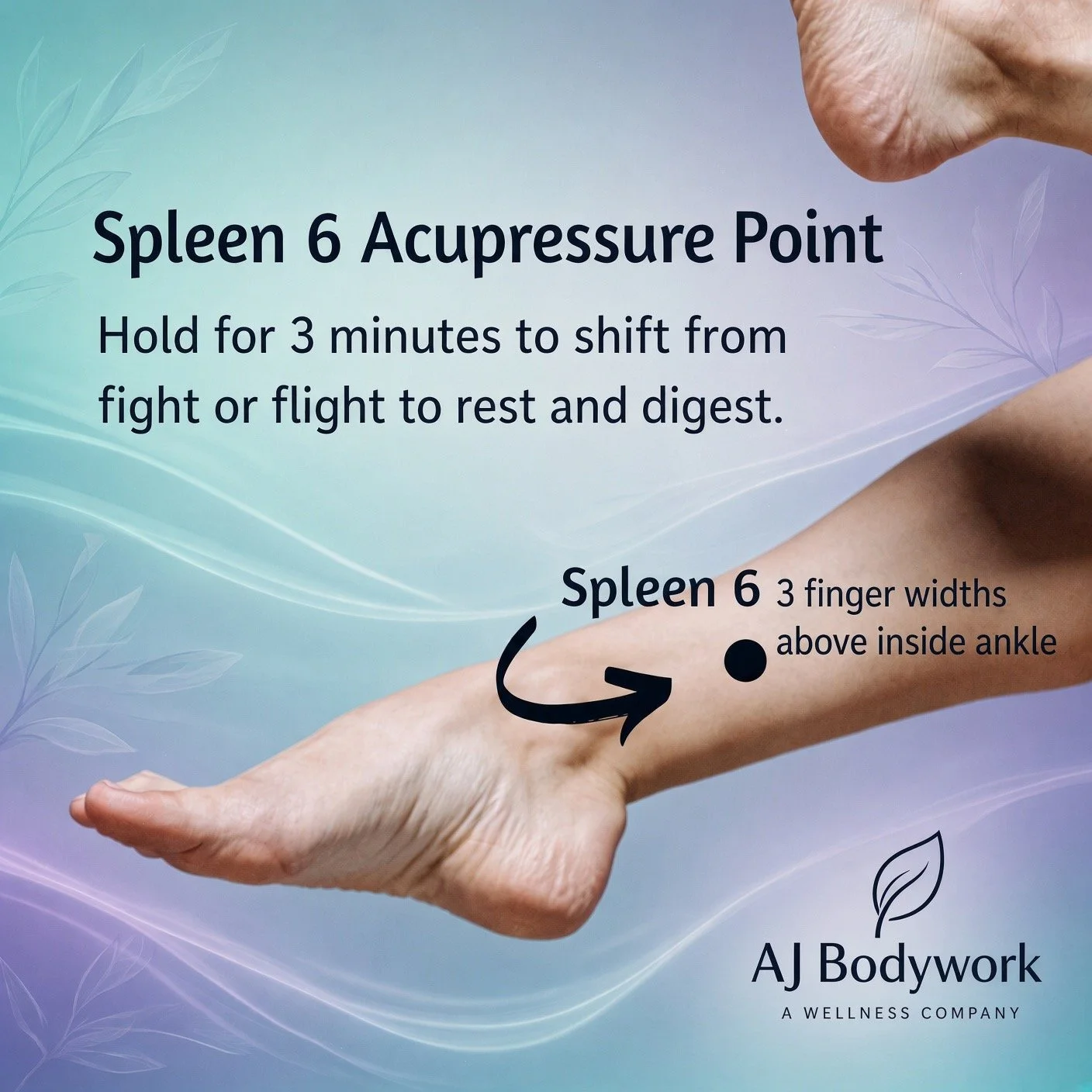
The feet contain dense networks of nerves and reflex zones that correspond to the rest of the body. Foot zone work and targeted acupressure can help ground a scattered or anxious system. One powerful point is Spleen 6 (also called Sanyinjiao), located roughly three finger-widths above the inner ankle bone, just behind the tibia. In traditional practice this point is used to calm whirling thoughts, support digestion, and help shift the body out of fight-or-flight. Hold steady, comfortable pressure for about three minutes on each side while breathing slowly. (Note: Avoid strong pressure on Spleen 6 during pregnancy.)
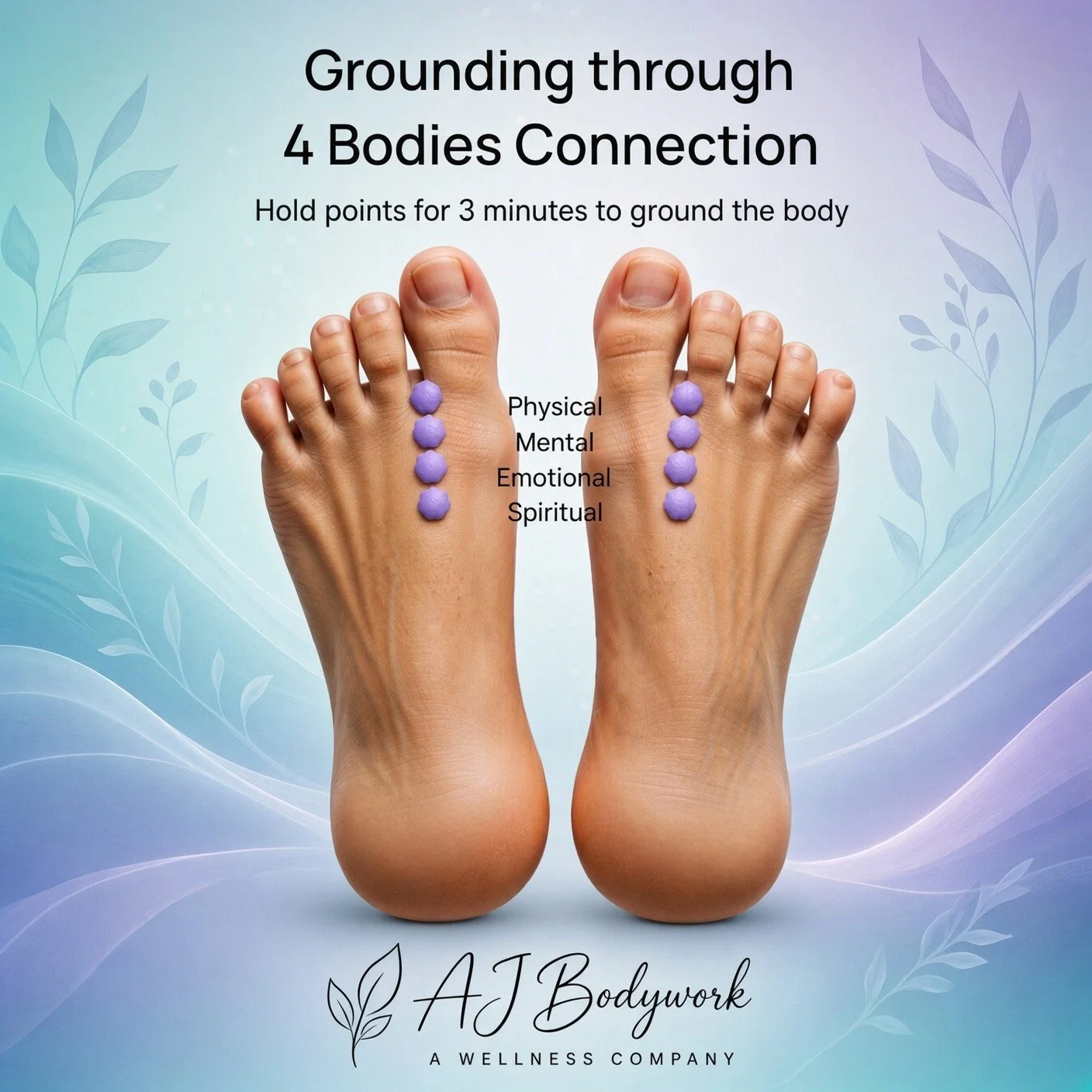
Another grounding method is the 4 Bodies Connection. On the inner edge of each foot, just below the ball, four small points correspond to the physical, mental, emotional, and spiritual aspects of the body. Holding these points gently for about three minutes can help create a sense of centeredness.
Everyday Practices You Can Use Today
These therapies work well alongside simple tools you can practice at home. The following come from educational materials we use with clients:
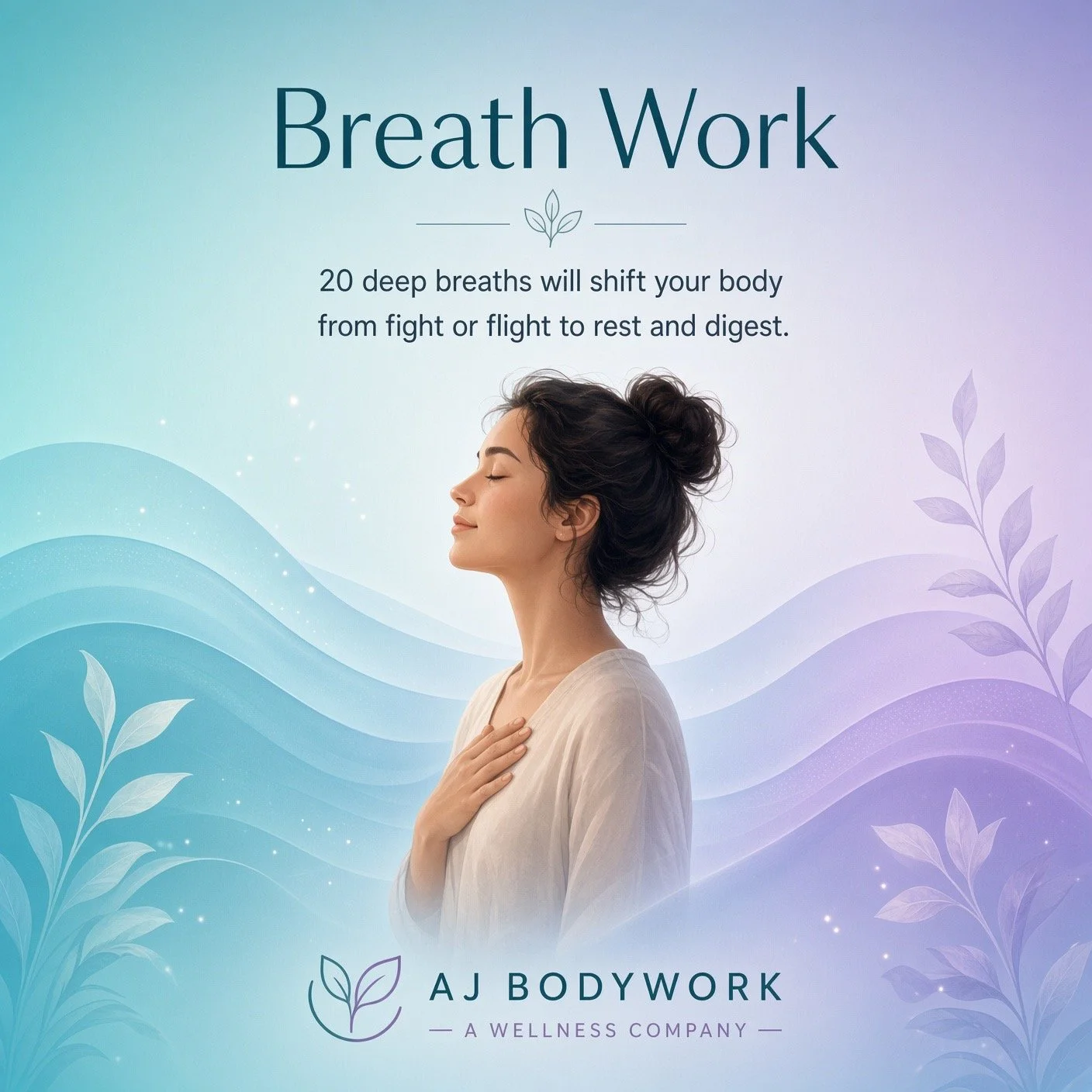
Breath Work
Twenty slow, deep breaths can begin shifting the body from fight-or-flight into rest-and-digest. Sit comfortably, place one hand on your chest, and let the breath move into the belly and lower ribs. Lengthen the exhale slightly longer than the inhale.
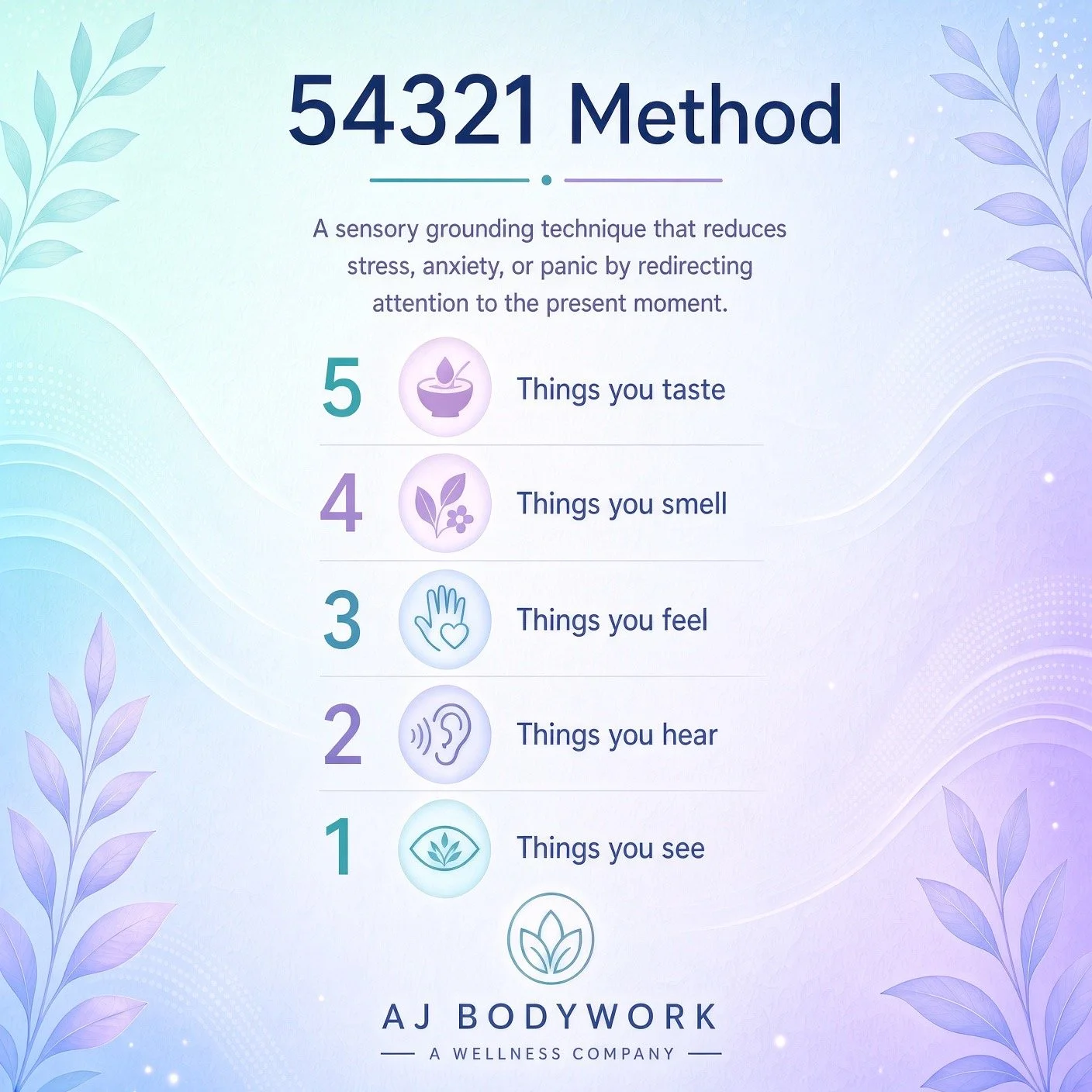
5-4-3-2-1 Sensory Grounding
When anxiety spikes, redirect attention to the present moment:
• 5 things you can taste
• 4 things you can smell
• 3 things you can feel
• 2 things you can hear
• 1 thing you can see
This simple sequence interrupts looping thoughts and anchors the nervous system.
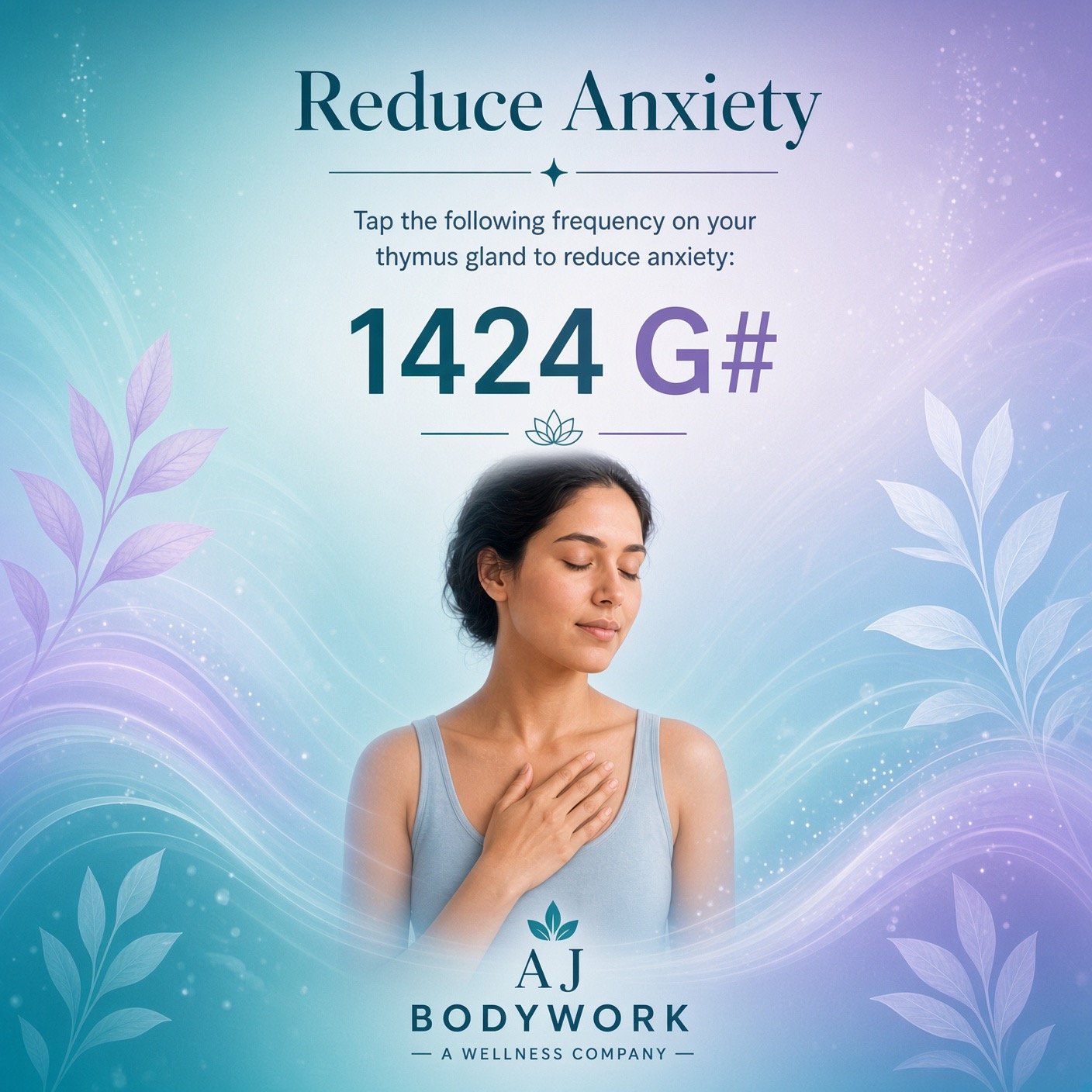
Thymus Tapping
Gently tap the upper chest (thymus area) while focusing on the sequence or frequency noted as 1424 G#. Many people find the rhythmic input settling.
Nervous System Regulators
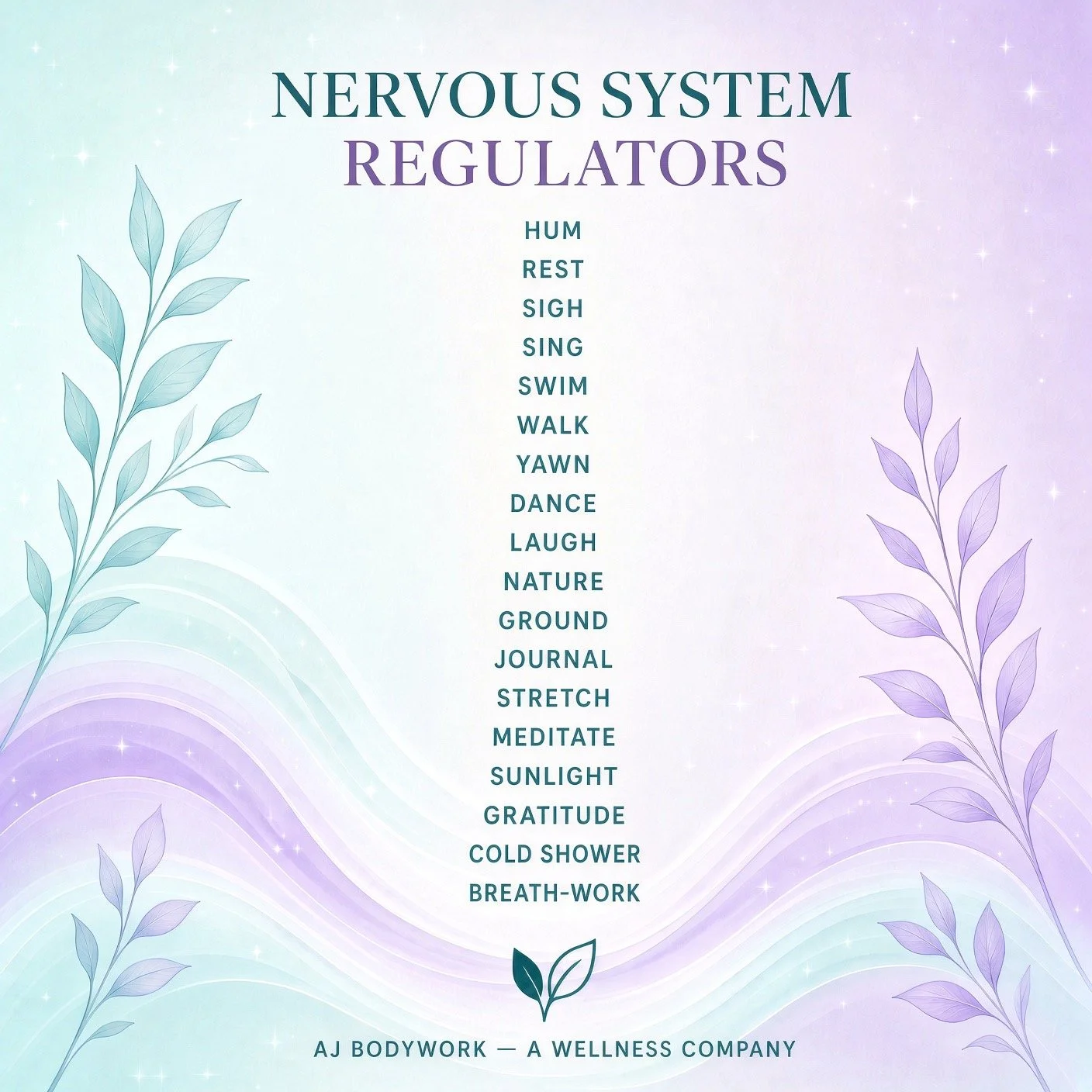
Small, consistent actions help the system stay regulated: hum, rest, sigh, sing, swim, walk, yawn, dance, laugh, spend time in nature, ground (barefoot when possible), journal, stretch, meditate, get sunlight, practice gratitude, take a cold shower, and do breath-work. Choose one or two that feel accessible and make them regular.
528 Hz Music
Listening to music tuned to 528 Hz has been associated in some studies with lower stress markers and calmer mood scores. Play it softly in the background while resting or practicing the other tools above. Results vary, and the calming effect of music in general is well established.
Putting It Together
Anxiety thrives when the body stays on high alert. CranioSacral Therapy and Manual Lymphatic Drainage offer skilled, gentle support that encourages the nervous system to downshift. Foot zones and acupressure points give you portable tools for grounding. Daily practices—breath work, sensory grounding, thymus tapping, movement, nature, gratitude, and calming sound—reinforce the shift.
These approaches are complementary. They are most helpful when used alongside any professional mental-health support you already have. If you are experiencing significant anxiety, panic, or related symptoms, consult a licensed healthcare provider.
At AJ Bodywork in St. George, Utah, we offer CranioSacral Therapy, Manual Lymphatic Drainage, Foot Zone Therapy, and supportive wellness practices tailored to your needs. To learn more or schedule a session, visit ajbodywork.com or call 435-215-6346.
A calmer nervous system is possible. Small, consistent steps—both in session and at home—help the body remember how to rest.